Last Updated on June 9, 2026 by David
What Essential Steps Should You Follow to Clean and Reseal a Small Slate Floor Before Damage Occurs?
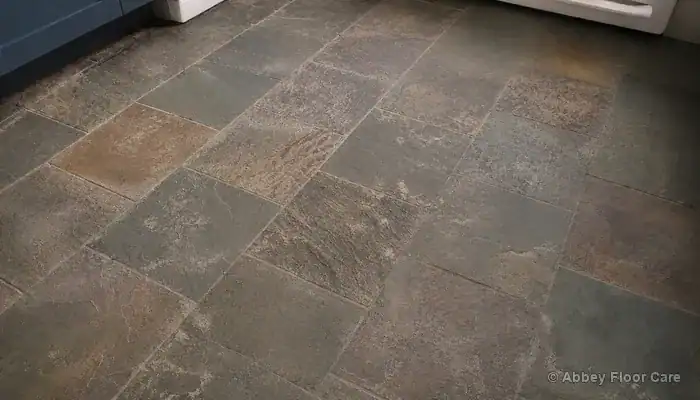
Cleaning a small slate floor can be an achievable DIY task if the area is manageable, the existing coating is thin enough to soften, and flooding the surface is unnecessary. Signs indicating the need for cleaning can be subtle. You might observe that standard mopping fails to yield satisfactory results, the colour appears dull, and dirty water tends to linger in the texture instead of being easily removed.
How Can You Spot Visible Issues on Your Slate Floor?
Slate cleaning becomes vital when routine washing merely spreads dirt rather than eliminating it. A riven floor features small ridges, hollows, and tile edges that trap residues from old cleaners, worn sealers, and continuous damp mopping. After drying, the surface may exhibit a grey appearance, particularly in high-traffic areas such as kitchens, doorways, and sink runs, where dirty water has settled in low spots over the years.
Build-up from old sealers often manifests as inconsistent shine, sticky edges, dark lines around grout joints, or a dull film that appears improved when wet but dries flat again. This pattern indicates that the floor has been more than just dusty. The cleaning water struggles against a layered surface film, suggesting that stronger household detergents may leave even more residue, complicating future cleaning efforts.
Residues from routine mopping can mislead you into believing that a more aggressive cleaner is required. the underlying issue is typically accumulation. Each wash leaves a trace of surfactant, which attracts additional soil, resulting in the floor re-soiling quicker as the surface is no longer clean enough to evenly accept a protective finish.
Concentrating on smaller areas makes slate cleaning more manageable, allowing you to observe how the surface reacts during the process. Tackling approximately five square metres provides ample opportunity for kneeling, scrubbing, wiping, and rinsing for most homeowners. While larger floors can still be cleaned by hand, it demands patience and an acceptance that the task will be slow and physically demanding on your knees, wrists, and shoulders.
What Is the Correct Sequence for Cleaning Products?
The original product sequence for cleaning small floors remains effective, dividing the process into distinct stages: coating removal, deep cleaning, rinsing, and resealing. LTP Solvex effectively softens old acrylic sealers and wax, while LTP Grimex emulsifies the softened residue and embedded soil. An impregnating sealer protects the cleaned slate without leaving a surface film, while a surface sealer or wax adjusts the final sheen only after the floor is clean and dry.
The order of application is more significant than the specific brand of product used, as each stage serves a unique purpose. Start by masking skirting boards, removing loose items, donning gloves and goggles, and then work on one or two square metres at a time. Apply the coating remover to the furthest reachable area, allow it to dwell, dampen it with the cleaning solution, agitate the surface, and remove the dirty slurry before it dries back into the low spots.
The first cleaning pass should not be regarded as the final outcome. Layers of old acrylic, wax, and detergent may necessitate several controlled passes before the tile and grout cease releasing grey or brown residue. Concentrating on the same small section is safer than flooding the entire room, as it keeps the slurry visible, maintains control over dwell time, and minimises the risk of dragging dissolved contamination across already cleaned areas.
Effectively removing wet slurry is a crucial aspect often underestimated in DIY efforts. A wet vacuum simplifies the task by extracting dirty liquids from riven textures, grout lines, and tile edges before they settle again. Although a mop, sponge, and cloth can work on very small areas, they require frequent rinsing, clean water changes, and a significant amount of patience, as they often just shift contamination instead of eliminating it.
How Can You Tell When Normal Cleaning Is No Longer Sufficient?
Slate cleaning has reached the appropriate stage for resealing when the surface no longer feels greasy, the rinse water remains relatively clear, and the floor dries without smears or sticky patches. Although pale wear marks may still be visible, as cleaning cannot restore surface colour lost to foot traffic, the objective is not to scrub away every variation. The aim is to remove residues to ensure the next finish can bond or penetrate evenly.
Paying attention to drying time is essential, as slate may dry quickly, but grout joints and riven troughs can retain moisture long after the surface appears dry. Allowing the floor to dry overnight or longer, particularly in the case of porous grout, reduces the risk of sealing in moisture within the texture, which can lead to patchy absorption, clouding, or poor adhesion.
Before applying a sealer to the entire floor, conduct a test. A colour-enhancing impregnator can dramatically deepen the hues of Welsh, Indian, or black slate, which may be the desired finish. it can also result in some mixed slate appearing too dark in shaded corners or beneath kitchen units. Performing a small test patch helps assess the appearance before committing to the complete floor treatment.
Once old coatings and residues are thoroughly removed, routine care becomes simpler. A neutral stone cleaner, along with a well-wrung mop and clean rinse water, will usually maintain a resealed floor far more effectively than harsh detergents. Broader cleaning routines are detailed in this guide to maintaining slate floors when they appear dull.
What Risks Can Emerge from Rushed Slate Cleaning?
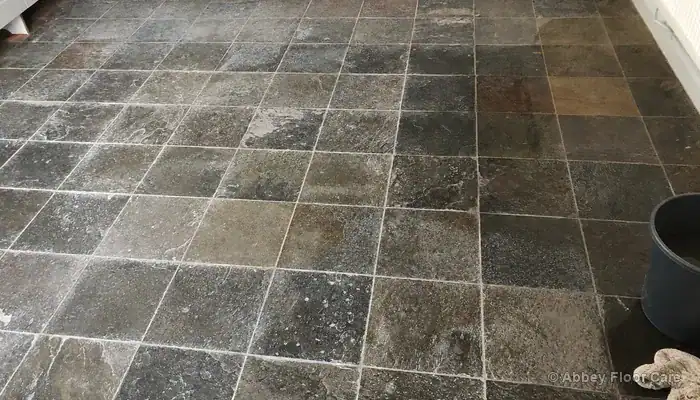
Hasty slate cleaning often leads to complications when critical factors such as cleaner strength, rinsing, drying time, or test patches are overlooked. Acidic products can alter the colour of softer slate, while harsh alkaline residues can impede the effectiveness of the next sealer if not adequately removed. The floor may seem cleaner when wet, but it can subsequently dry with pale smears, sticky ridges, or darkened grout lines.
Thorough testing helps prevent cleaning errors from developing into lasting problems for your floor.
The accumulation of residues worsens when dirty slurry dries back into the riven surface before extraction is complete. Excessive wetting also allows porous grout more time to absorb contaminated liquid, resulting in joints that appear darker than before cleaning commenced. Maintaining a controlled sequence ensures the cleaning process is powerful enough to remove old coatings while being cautious enough to avoid turning a minor maintenance task into a significant repair issue.
What Tools Are Necessary for Controlled and Effective Slate Cleaning?
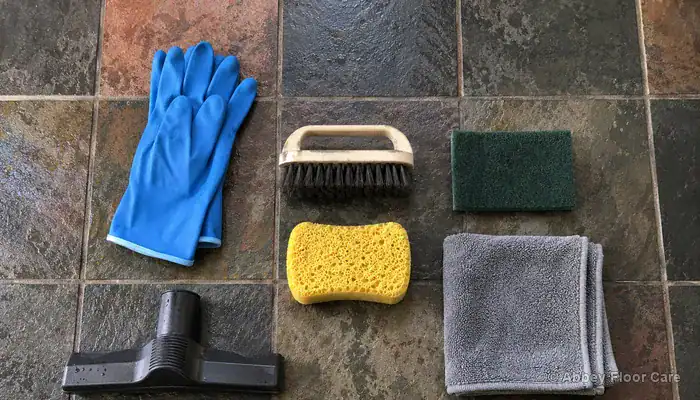
Employing the right tools makes slate cleaning predictable, allowing for controlled agitation, slurry removal, and rinsing without overwhelming the surface. Gloves, goggles, and knee pads protect you while working closely to the floor. Utilizing masking tape will shield skirting boards and fixed furniture from splashes during the coating removal process.
A brush or hand pad loosens softened sealer from the tile surfaces, while a grout brush effectively reaches the joints and tile edges where build-up typically occurs. A wet vacuum is the most essential tool, as it extracts dirty liquids before they settle into the ridges and troughs. A clean-water bucket, sponge, mop, and absorbent cloths facilitate repeated rinsing, ensuring the final surface is genuinely clean rather than merely diluted.
How Can You Determine When Your Slate Floor Is Prepared for Resealing?
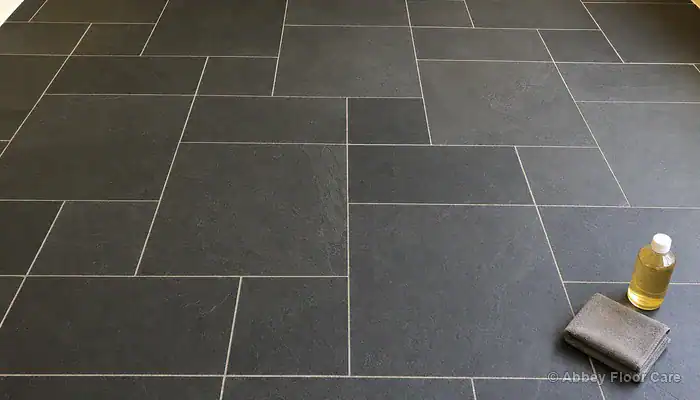
Before you conclude the cleaning process, the floor may still smear when wiped, the rinse water may darken quickly, and old coatings may cling around tile edges. At this stage, sealer should not be applied, as it will trap contaminants and worsen patchiness instead of providing protection for the slate.
Once the cleaning is complete, the surface dries uniformly, the grout no longer releases dirty residue, and the slate easily accepts a test coat without exhibiting beading in some areas or excessive soaking in others. Establishing a practical aftercare routine is crucial: removing dry soil, damp mopping with a neutral cleaner, using clean rinse water, and promptly wiping up spills will help maintain the resealed finish over time.
Where Can You Access Additional Information on Maintaining Slate Floors?
Further guidance on slate care is best addressed after discussing the cleaning method, as this page primarily focuses on a specific cleaning, stripping, and resealing task rather than all potential issues a slate floor may encounter. Topics such as flaking, filler collapse, sealer selection, wet-look finishes, and long-term maintenance all require broader context following clarification of the immediate cleaning work.
Effective slate floor maintenance is most successful when the cleaning routine aligns with the type of stone, the surface finish, and the intended usage of the room. For instance, a kitchen floor adjacent to garden doors necessitates a different cleaning approach compared to a low-traffic hallway, even if both are constructed from slate. More comprehensive insights on behaviour, care, and long-term protection are available in this extensive guide on slate floors in UK homes.
What Products Are Recommended for Effective Slate Cleaning?
Slate Cleaning Chemicals
Slate Impregnating Sealers
Slate Surface Sealers
Slate Floor Wax
- LTP Clearwax — estimated £21.00 for 1 litre
Cleaning Materials
Personal Protective Equipment

David Allen — Abbey Floor Care
With over 30 years of experience, David Allen has specialised in cleaning and restoring slate floors for Abbey Floor Care. His work involves addressing small domestic areas that require the removal of old sealers, dirty slurry, and detergent residues prior to resealing. His insights on slate cleaning emphasise controlled chemistry, careful extraction, and realistic DIY limits, enabling homeowners to protect their floors rather than unintentionally sealing in problems.
The article Clean Slate Floor Before Old Sealer Traps Dirt was first published on https://www.abbeyfloorcare.co.uk
The Article Clean Slate Floor: Prevent Dirt from Trapping Under Sealer appeared first on https://fabritec.org
The Article Clean Slate Floor: Stop Dirt from Getting Under Sealer Was Found On https://limitsofstrategy.com